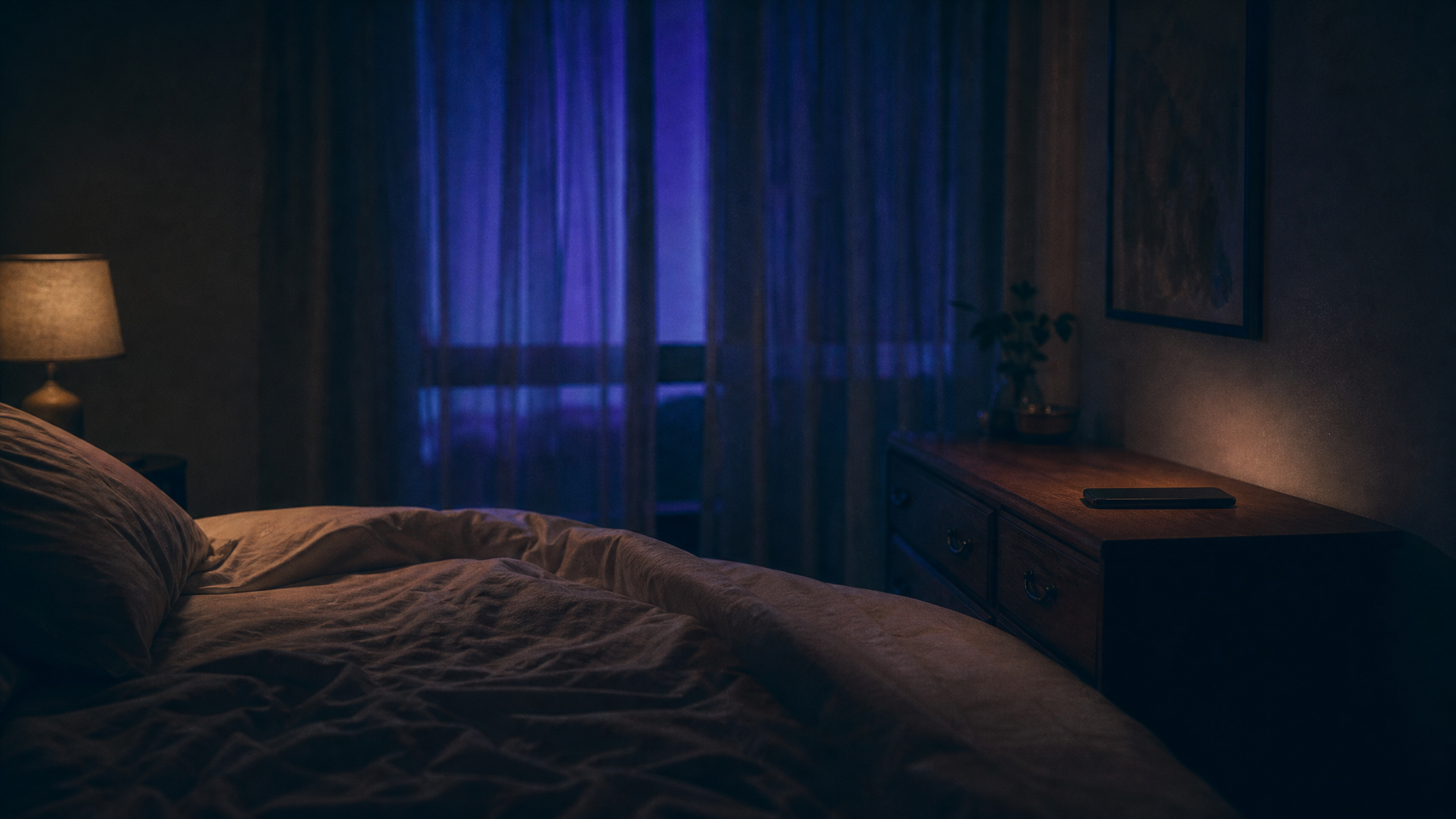
If you can’t sleep, you are in very large company. Everyone has trouble sleeping some of the time, and one rough night does not mean something is wrong with you. Usually the trouble is trying too hard. Lying there working at it teaches your brain that bed is a place for being awake. Keep the room cool and dark, turn the clock away, and if you have been awake a while, get up and do something quiet in low light until you feel sleepy.
If you are reading this with one eye open and the other eye furious, welcome. The ceiling has been stared at enough for one night.
Why you can be exhausted and still awake
Two systems decide when sleep arrives. The first is sleep drive, which the National Institute of Neurological Disorders and Stroke (NINDS) describes as getting stronger every hour you are awake. Part of it is a chemical called adenosine, which helps make you feel sleepy. Caffeine works by blocking adenosine, which is why the afternoon coffee can still be with you at bedtime.
The second is your body clock, a rhythm based on a 24-hour day that makes you sleepy at night and helps you wake in the morning. NINDS says light may be the biggest influence on your sleep-wake cycle, and that light can make it harder to fall asleep. A bright screen late at night sends the clock a mixed message.
Then there is alertness. Your brain has systems that keep you switched on, and sleep-promoting cells that become more active near bedtime and quiet them down. Stress and worry give the “on” side a reason to keep going. So you can be worn out and still wide awake.
That is also why night shift is hard. NINDS notes that night shift workers often have trouble falling asleep when they go to bed, because their body clock is disrupted.
Why trying harder backfires
Sleep gets worse the harder you work at it. Trying hard is a kind of alertness, so gritting your teeth at the ceiling feeds the system you need to quiet.
A racing mind is the same problem from the inside. The NHS notes that worry, stress, and anxiety can make it harder to sleep, and a dark, silent room gives every thought the whole stage. Students know this one: the exam you are not thinking about is all you can think about.
Then the clock turns worry into math. “If I fall asleep right now, I still get…” and the number keeps shrinking. The National Heart, Lung, and Blood Institute (NHLBI) says worrying about whether you will get enough sleep and watching the clock can raise your risk of insomnia or make it worse.
Lie there fighting it for enough nights and the bed itself becomes a cue for being awake. You walk in tired, lie down, and your brain helpfully remembers: oh, this is where we worry.
The get-up move
Public health pages agree here. MedlinePlus says if you lie awake for about 15 minutes, get out of bed and go to another part of the house. Mayo Clinic and the NHS say about 20 minutes. Keep the light low, do something quiet, and go back to bed when you feel sleepy. That way, MedlinePlus says, your bed is less likely to become a place of stress.
Don’t time it. A rough sense is enough, and checking the clock would undo the point. Repeat if needed, and keep your usual wake-up time the next morning, as Mayo Clinic advises.
New parents get their own version: the baby goes back down after a feed, and you don’t. NHLBI lists waking often to care for a baby among the things that disturb sleep, so this is not a personal failing. Same move: low light, something quiet, back to bed when your eyes get heavy. If the trouble is waking later in the night, What to do when you are awake in bed covers that version.
One snag: the alarm often lives on the phone, so the phone lives on the nightstand, and the phone is never a quiet activity. A separate alarm clock lets the phone charge in another room. The Loftie Clock is built for this. Its maker pitches it as a way to break up with your smartphone at night, with the alarm and sleep sounds on the clock itself. Turn its face away from the pillow too. Tonight, the best clock is one you can’t see.
What counts as quiet
Quiet means dim, low-stakes, and a little dull. MedlinePlus and the NHS suggest a book, soft music, or an audiobook. A paper book you have already read is ideal: no cliffhanger to chase.
You can also try belly breathing. Put a hand on your belly and breathe in so your hand rises while your chest stays still. Hold for a count of five, release for a count of five, and repeat. Another MedlinePlus option is counting backward from 300 by threes, which is boring in the most useful way.
If one worry keeps circling, write it down and close the notebook. Mayo Clinic and the NHS both suggest putting worries on paper before bed, so they can wait until morning.
What does not count: the phone, the TV, and work email. Gamers, with love: “one more match” is the opposite of dull, and the screen is bright and close. NHLBI lists using electronic devices close to bedtime among the habits that can raise the risk of sleep problems. The game will still be there tomorrow.
The room tonight
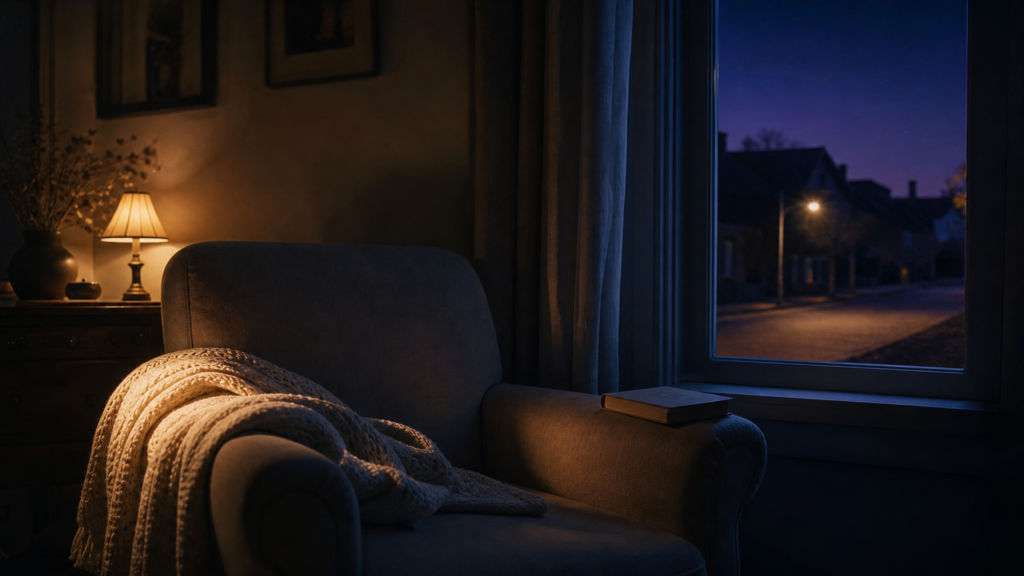
Mayo Clinic, the NHS, and NHLBI agree on three words: cool, dark, and quiet. Cool, but not so cool that you wake up cold. Dark, with curtains closed, the clock turned so you cannot see it from your pillow, as MedlinePlus suggests, and the phone in another room. Quiet, or a steady sound if silence makes every creak an event. Fan noise for sleep covers the hum, and Why a cool, dark room helps goes deeper.
If a streetlight finds your face, MedlinePlus and the NHS both mention a sleep mask. One option is the Manta Sleep Mask, with adjustable eye cups that its maker says block light without pressing on your eyelids.
For a snoring partner, traffic, or thin walls, the NHS suggests earplugs. Loop Dream earplugs are designed for sleep, with a low-profile shape for side sleepers and several ear tip sizes. Its maker is clear that they reduce noise rather than erase it.
Neither one treats a sleepless night. Each just removes one thing in the way.
First night somewhere new
Hotels, dorms, a friend’s couch. If sleep is harder there, your brain is being reasonable. In a 2016 Brown University study, during people’s first night in a sleep lab, one side of the brain stayed more watchful than the other, like a night watch, and reacted more to unusual sounds. On later nights the difference was gone. That is a normal response to a new place, not a disorder. Give it a night or two.
Tomorrow, gently
Habits help over days and weeks, not at midnight. Wake up at about the same time every day, weekends included. The CDC advises avoiding caffeine in the afternoon or evening. Go easy on alcohol near bedtime. NHLBI notes it can make it easier to fall asleep but makes sleep lighter and waking more likely. Keep naps short and early, and put screens down a while before bed.
Sleep hygiene tips that actually make sense has the fuller list, and Why the same wake time helps you fall asleep explains the morning anchor.
Where this page stops
The American Academy of Sleep Medicine (AASM) says an occasional night of poor sleep does not mean you have insomnia. This page cannot diagnose anything, and it cannot promise tonight will be easy.
If sleep trouble keeps happening, talk with a healthcare provider. The CDC advises it if you regularly have problems sleeping, and MedlinePlus says so if lack of sleep is interfering with your daily activities. The AASM describes chronic insomnia as trouble at least three times a week for at least three months, and a sleep doctor is the one who makes that call.
If it is long-term, there is good news. NHLBI says cognitive behavioral therapy for insomnia (CBT-I) is usually recommended as the first treatment for long-term insomnia and can be very effective. It is guided by a doctor, nurse, or therapist. The get-up move is one small piece of it, called stimulus control. The full program is for a professional to guide, not for you alone at night.
For now: cool, dark, clock turned away. Still awake after a while? Get up, do one quiet thing, and come back when you are sleepy. The ceiling does not need watching.
Questions people ask
How long should I lie awake before getting up?
There is no stopwatch to obey. MedlinePlus suggests about 15 minutes, and Mayo Clinic and the NHS say about 20. Do not time it, though, because clock-watching feeds the problem. When it feels like a while, get up, keep the light low, do something dull, and come back when your eyes get heavy.
Why am I exhausted but still wide awake?
Two systems run the night. Sleep drive builds the longer you are awake, and your body clock sets the timing. Alertness can override both, and stress or a bright screen gives it a reason to stay on. So you can be worn out and wired at once. It is common, and it usually loosens.
What counts as a quiet activity at night?
Dim, low-stakes, and a little dull. MedlinePlus and the NHS suggest a book, soft music, or an audiobook, and MedlinePlus also mentions counting backward from 300 by threes, which is boring in the useful way. The phone, the TV, and work email do not count, because they are bright and built to keep you going.
When should I talk to someone about not sleeping?
If trouble sleeping happens regularly, or it is getting in the way of your days, talk with a healthcare provider. The CDC and MedlinePlus both point people there. One rough night is not a diagnosis, and this page cannot give one. A professional can look at the whole picture and offer real options.
Sources
- MedlinePlus, Can’t sleep? Try these tips
- Mayo Clinic, Sleep tips: 6 steps to better sleep
- NHS Every Mind Matters, How to fall asleep faster and sleep better
- NHLBI, Insomnia: Causes and Risk Factors
- NHLBI, Insomnia: Treatment
- NINDS, Brain Basics: Understanding Sleep
- CDC, About Sleep
- AASM Sleep Education, Insomnia
- Tamaki et al., Curr Biol, 2016 (PubMed): Night watch in one brain hemisphere and the first-night effect