Author: wealthyliving2016

  • Why a cool, dark room helps

    Why a cool, dark room helps

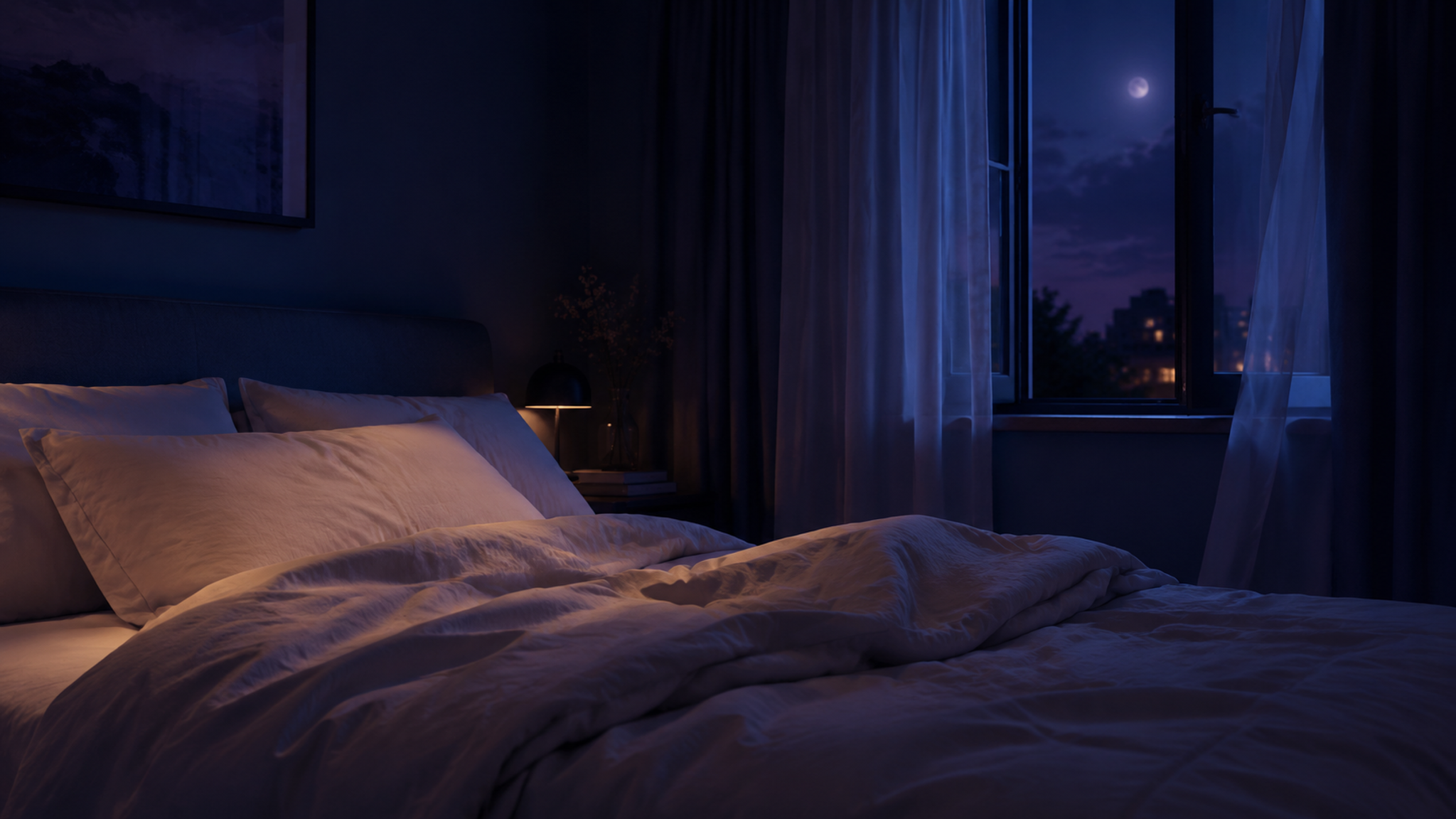
    A cool, dark room helps because sleep starts while core temperature is falling. The heat leaves through the skin, and a cool room gives that heat somewhere to go. Colder is not better. Darkness lets melatonin rise. Bright evening light, including a phone, can hold it back.

    Sleep starts while you cool down

    Sleep begins during that fall in core temperature. The body is letting heat go, not fighting to stay warm. A stuffy room makes the fall harder. A little cool is enough for many people, with a cover they can push off.

    Heat needs somewhere to go

    The heat leaves through the skin. A cool room is simply a place for it to go. The room does not need to be cold, and colder is not better. If the air outside is safe and quiet, a cracked window does the same job as a cooler setting. There is no degree to hit.

    Darkness lets melatonin rise

    Darkness lets melatonin rise. Bright evening light, including a phone, can hold it back. You do not need a blacked-out room on the first night. A dim lamp instead of the ceiling, the phone out of your hand, and curtains that meet are enough to stop the room from arguing with the night.

    This is a description of the room, not a treatment and not a product. If sleep stays hard most nights, a clinician is the right next conversation.

    Waking in the lighter half of the night is a different question. Why you wake around 3 a.m.
  • Why you wake around 3 a.m.

    Why you wake around 3 a.m.

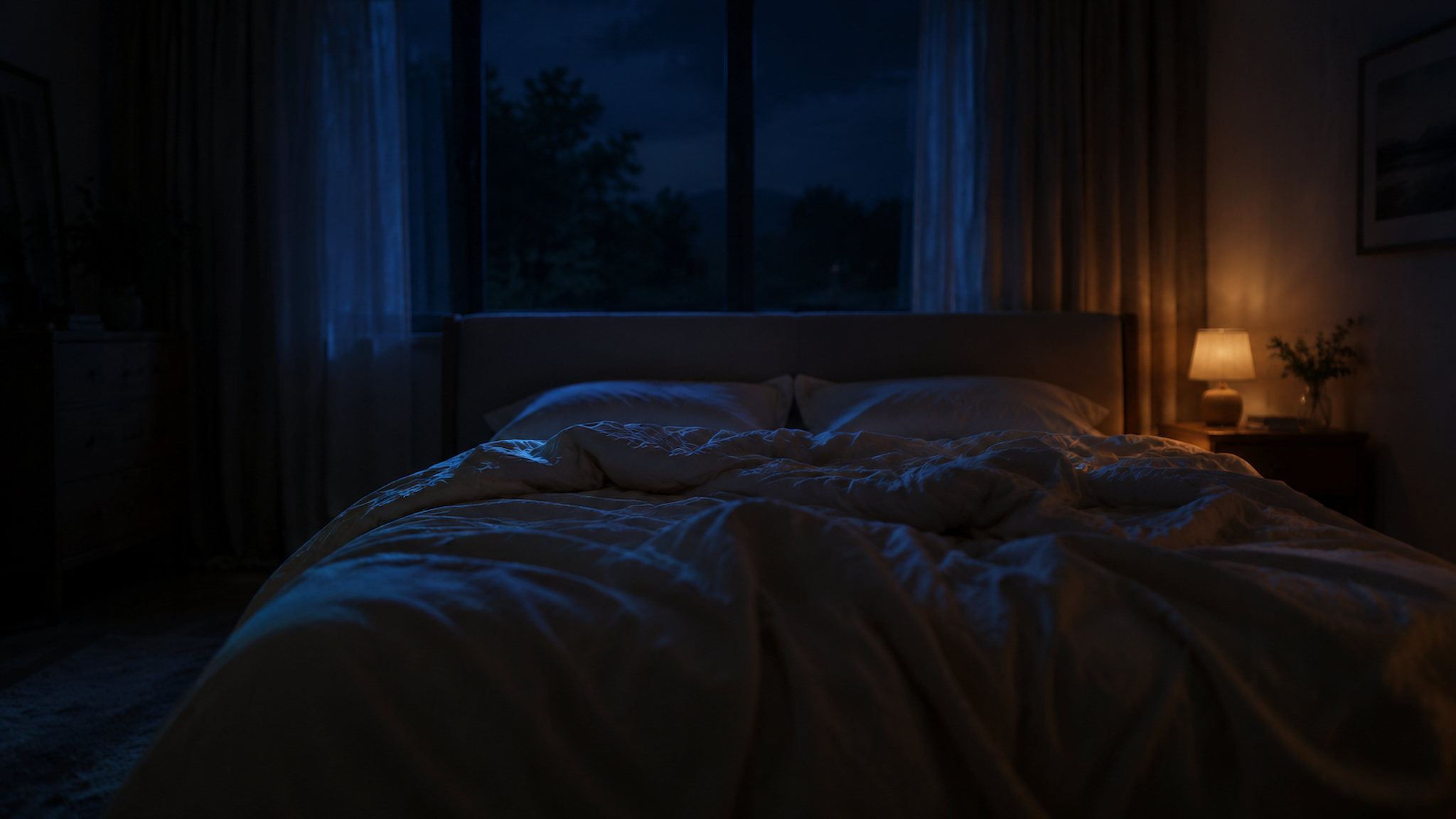
    You wake around 3 a.m. because the second half of the night is lighter. Sleep runs in cycles of about 80 to 100 minutes, and the later cycles carry more REM, which is easier to leave. It is not a 3 a.m. cortisol spike. Cortisol stays low through the early night and peaks near your usual morning wake.

    The second half is lighter

    The first half of the night holds more deep sleep. Later cycles are dream-heavy, and dream sleep sits closer to waking. A noise, a warm room, or a full bladder is more likely to register then. Waking is not, by itself, a sign that the night failed. A bright phone or a clock check is what usually keeps that short wake going. The hour itself is not the cause.

    Cortisol is not the 3 a.m. alarm

    Cortisol, a hormone that helps you get up, stays low through the early night. It rises toward your usual morning wake, and it peaks around that wake, not at 3 a.m. If you are awake at 3, you are in the lighter part of the night, when waking is simply easier.

    If this happens often and the day feels it, a clinician is the person who sorts that out. This note does not promise the waking will stop.

    The room can make that lighter sleep easier to leave. Why a cool, dark room helps.