
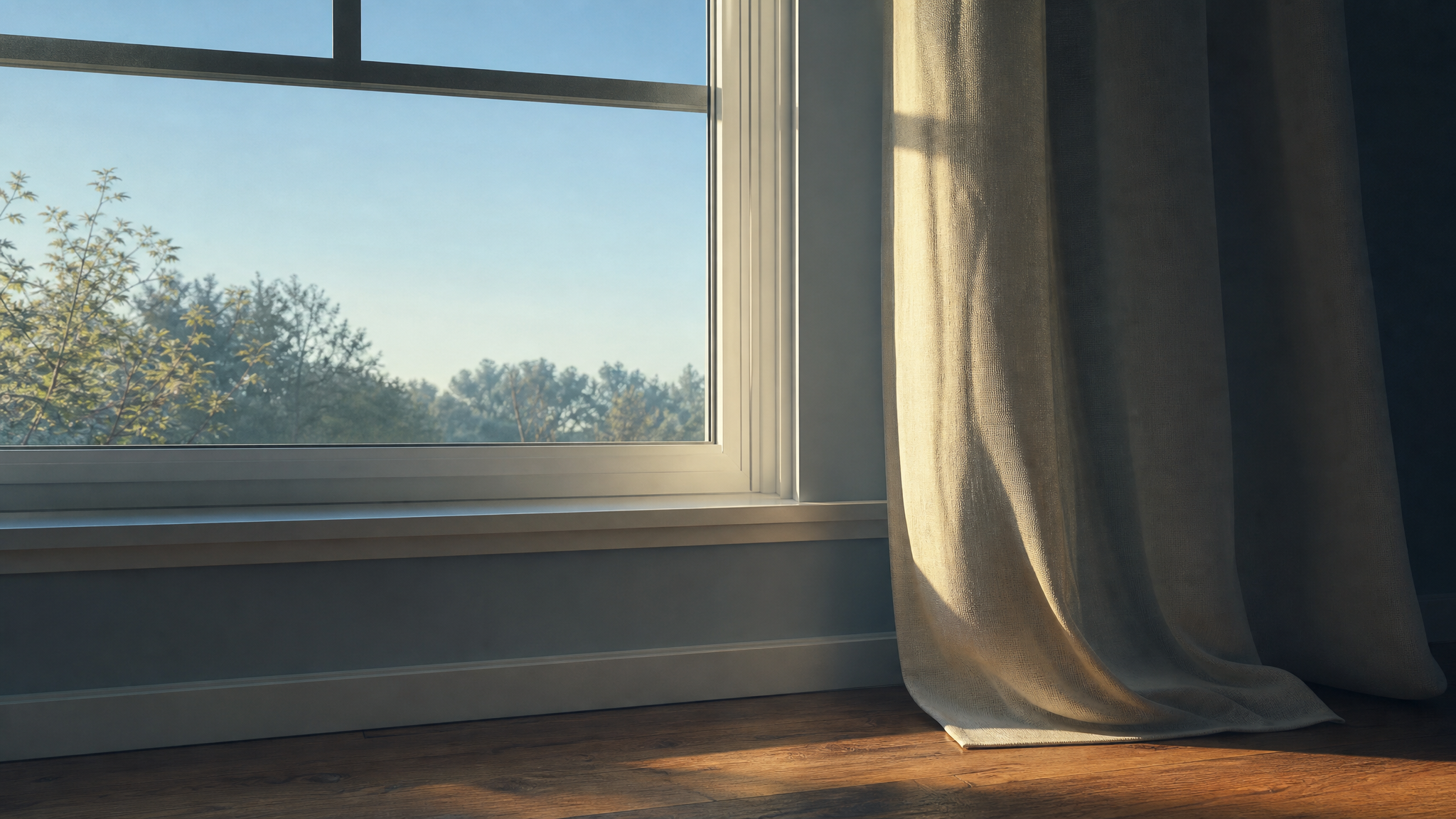
A dark room at night is only half of the clock. Morning light is what sets it. Light through your eyes tells the brain what time it is, and bright light early in the day is what makes the evening feel sleepy on time. Spend some time outside early in the day, as NHLBI suggests. Indoor lamps are a weak stand-in.
The eyes set the clock
Light lands on the eye, and the brain reads it as the time of day. Daylight is much brighter than indoor light, so a morning indoors, under lamps, does not do the job of a short time outside.
What the morning buys you at night
Light and darkness keep the body clock in step with the day, and that clock times melatonin, the hormone darkness lets rise. NHLBI notes that melatonin starts to increase in the evening and peaks in the early morning. You do not need a special lamp. You need the sky in the first hours after you get up.
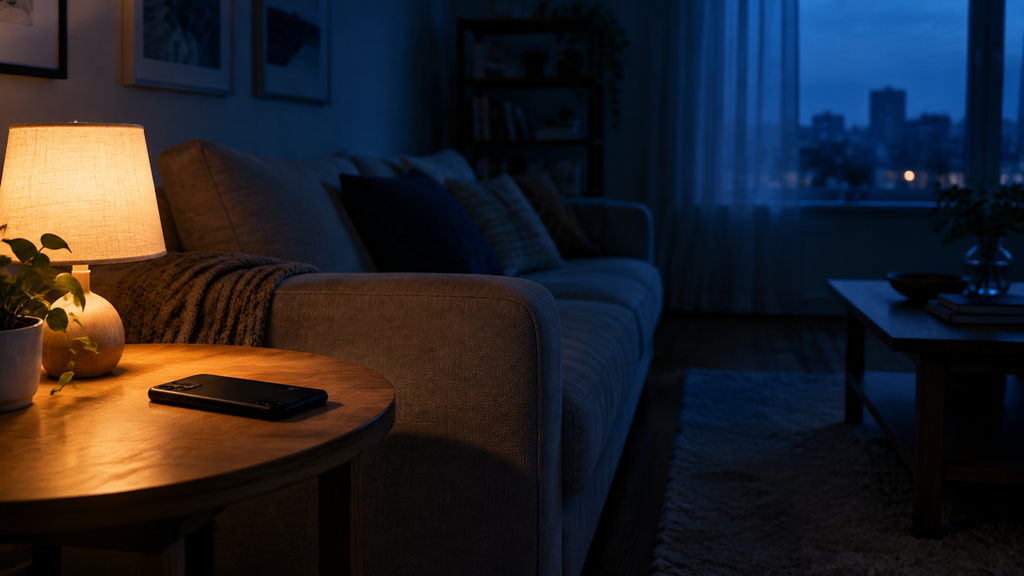
Evening light works the other way
Bright light at night, including a phone, holds melatonin back. The same clock that needed the morning now needs the light to drop. Dim the rooms. Put the phone down. A small lamp is enough to move around. The ceiling light argues with the night.
What this does not do
A morning outside will not fix every hard night. This note is not a treatment. It is not a product. If sleep stays hard most nights, a clinician is the person who sorts that out. This note does not promise you will fall asleep on time.
The room at night is the other half. Why a cool, dark room helps
The morning you repeat is the anchor for that light. Why the same wake time helps you fall asleep
Questions people ask
How does morning light help me sleep at night?
Light reaching your eyes tells your brain what time it is. Bright light early in the day sets the body clock, and that clock decides when the evening feels sleepy. Daylight is much brighter than indoor lamps, so a little time outside in the morning does work that a dim indoor morning cannot.
How much morning light do I need?
There is no exact dose for everyone. NHLBI suggests spending some time outside early in the day, and a short spell outdoors is a practical place to start. Even a cloudy sky is far brighter than most rooms. Pair it with your usual wake time and the habit tends to do quiet work.
Do I need a light therapy lamp?
Not for everyday sleep habits. Daylight is much brighter than indoor light, and a short time outside early in the day is what NHLBI suggests. If you are thinking about a light therapy device for a specific reason, that is a conversation for a healthcare provider. Start with a few minutes outside and a steady wake time.