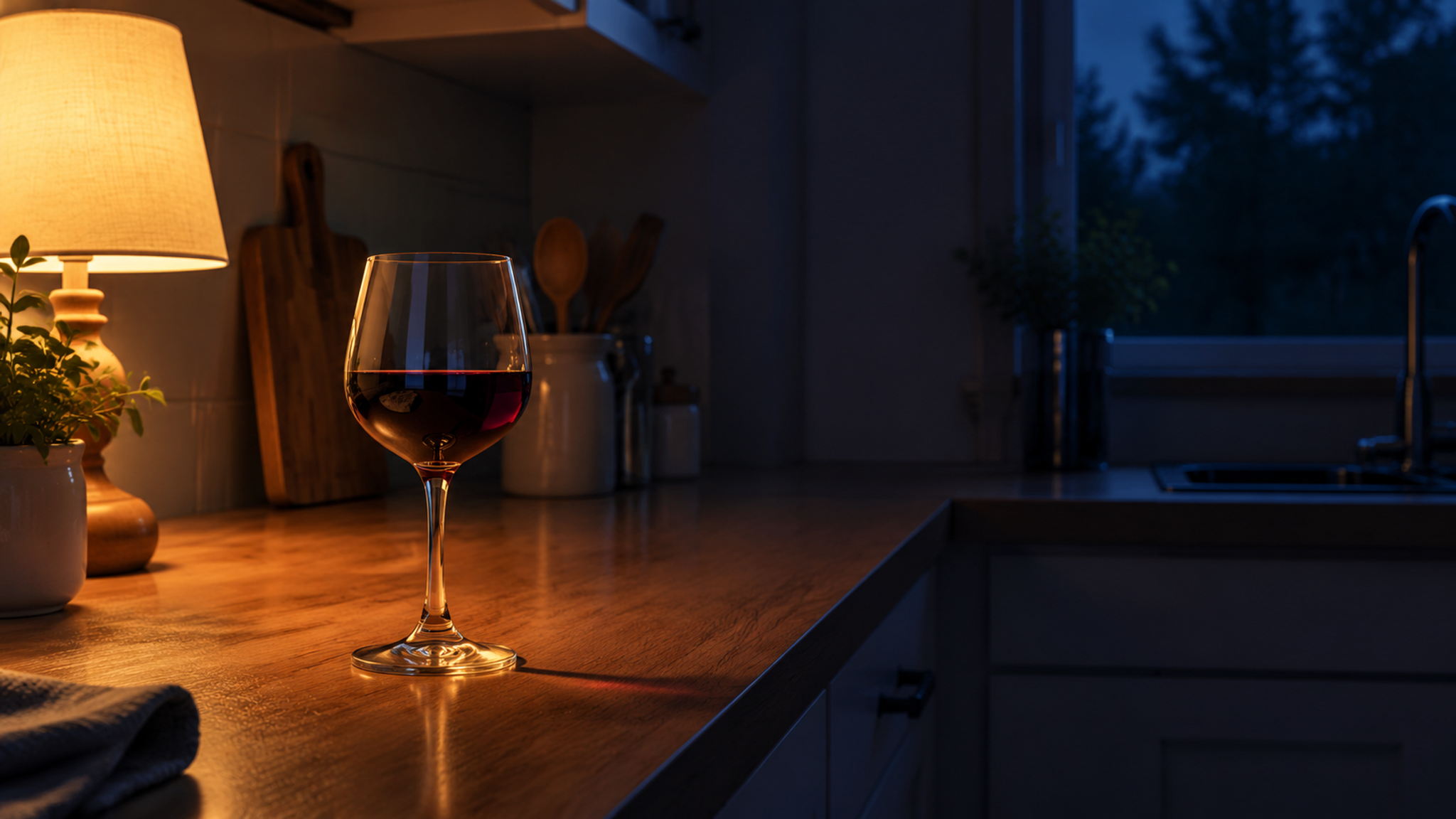
A drink near bed can put you under quickly and then wake you later. Alcohol is a sedative, so the first part of the night comes fast and feels deep. As your body clears it, sleep gets light, dream sleep gets short, and you wake more. Keep drinks away from bedtime, as NHLBI and the CDC advise.
Why the start feels deep
With alcohol still in your blood, the early night leans toward deep sleep and away from dream sleep. You may drop off fast and think the drink worked. Dream sleep is the stage the later night needs more of, and you spent the early night in the heavy stage instead.
What happens as it wears off
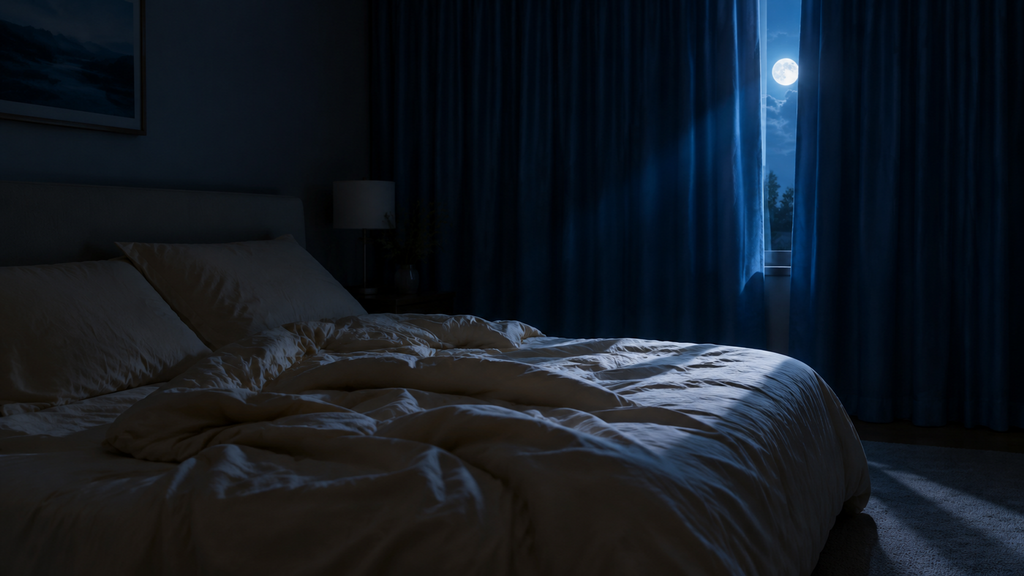
Drinks close to bed are still in your blood when you lie down, and they wear off during the second half of the night. As the level drops, sleep shifts into the lightest stage. Wakes come more easily, and a short wake is harder to leave. This is not a special hour. It is not a hormone alarm. It is the drink leaving during the half of the night that was already lighter.
Leave a gap before bed
Stop well before bed. A different drink does not replace that gap. Leave longer if you had several, if you drank on an empty stomach, or if you already know one drink sits with you. Do not use the glass as the way you fall asleep. If you are sleepy, go to bed. One more usually lands inside the gap.
What this does not do
A gap will not repair every hard night. This note is not a rule about whether you drink. It is not a treatment. If the later night stays broken most nights, or the day feels the loss, a clinician is the person who sorts that out. This note does not promise the night will stay in one piece.
If you do wake and stay up, leave the bed for something quiet and dim. What to do when you are awake in bed
The lighter half of the night is its own question. Why you wake around 3 a.m.
Questions people ask
Does alcohol help you sleep?
It can help you drop off faster. The catch comes later. NHLBI says alcohol can make it easier to fall asleep, but the sleep tends to be lighter, so waking in the night is more likely. Drinks close to bed wear off during the second half of the night, so the start may feel deep while the night is more broken.
How long before bed should I stop drinking?
NHLBI and the CDC advise keeping alcohol away from bedtime, and the general idea is to leave a real gap so it is not wearing off while you sleep. There is no perfect cutoff for everyone. If you notice early-morning wakes after evening drinks, try an earlier last glass and see what changes.
Why do I wake up a few hours after drinking?
Drinks taken close to bed are still in your blood when you lie down and wear off during the second half of the night. NHLBI notes the sleep that follows alcohol tends to be lighter, so a small sound or a full bladder registers more easily, and a short wake can be harder to leave.