Sleep hygiene sounds like something you fail at on a report card. It is mostly the habits around sleep, and the useful ones have plain reasons. A steady wake time. A cool, dark, quiet room. Less evening light, caffeine, and alcohol. A wind-down that is boring on purpose. None of this grades you. It just lines up with how sleep works.
Same wake time beats a perfect bedtime
Your body clock takes its cue from the morning more than from the hour you meant to sleep. Get up at roughly the same time each day, and the evening has a steadier point for when sleepiness shows up. Slide the morning later after a short night, or chase a bedtime that keeps moving, and the night has nothing solid to aim at. The clock reads what you did when the day started, not the bedtime you meant.
Weekends do not need to match Monday to the minute. Keep it close to your weekday time, and you still give the clock something to hold. Sleeping until noon after a hard week feels kind in the moment. It also pushes the next sleepy window later, which is how Sunday night turns into a stare at the ceiling.
Why the same wake time helps walks through that morning cue in more detail. Morning light is the other half of the same clock. Light through the eyes is what times it, so a short spell outdoors early in the day does work a dim indoor morning cannot. Why morning light helps the night.
The room: cool, dark, quiet
Sleep starts while core temperature is falling. Heat leaves through the skin, and a cool room gives that heat somewhere to go. The aim is comfortable, not cold. Preferences differ. A stuffy room makes the fall harder. A little cool, with covers you can push off, is enough for many people. You just want the room to stop arguing with a body that was already cooling down.
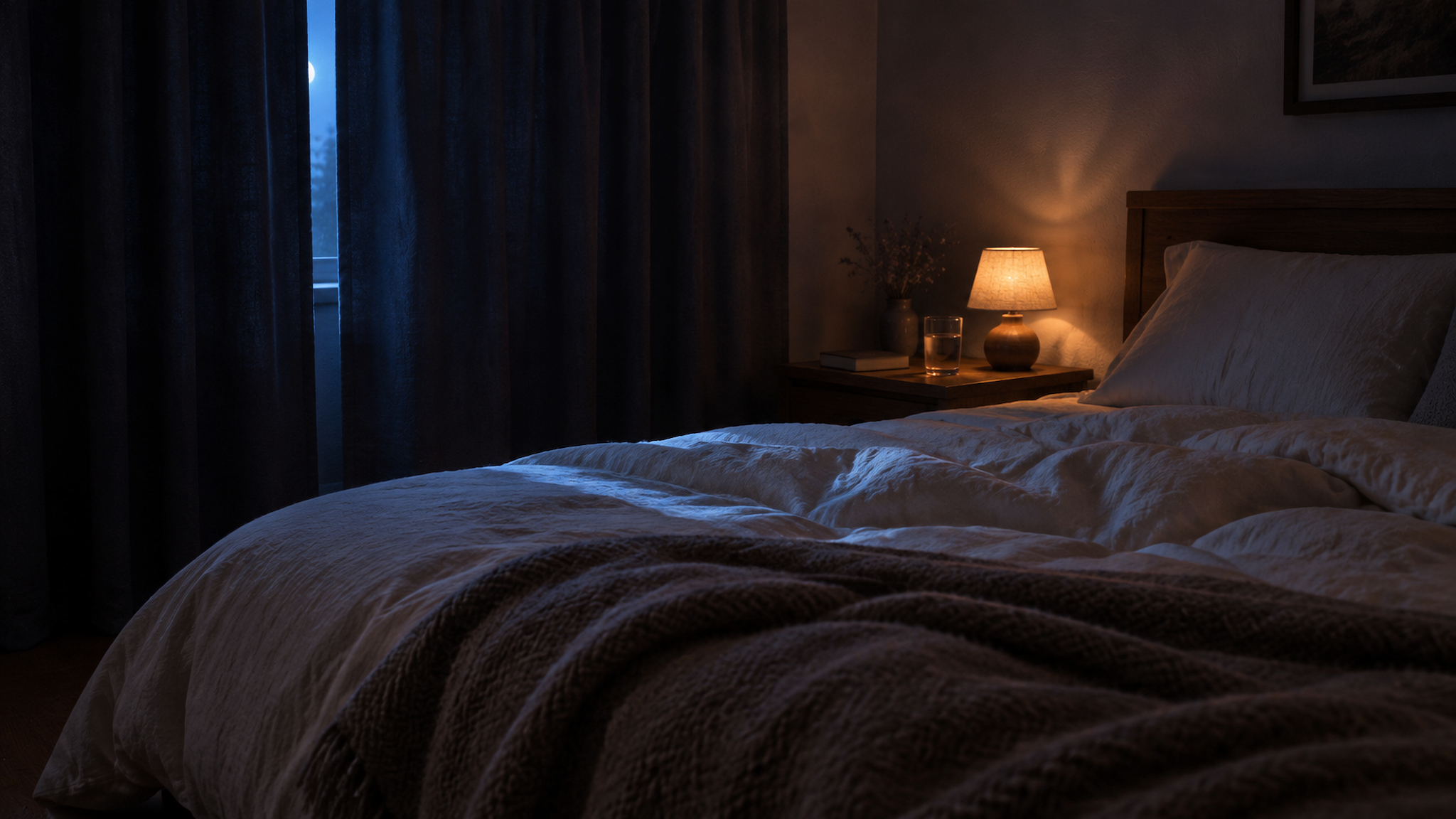
Darkness lets melatonin rise. Light through the eyes is the signal the clock uses, so bright evening light can hold that rise back. You do not need a blacked-out cave on the first night. Curtains that meet, a dim lamp instead of the ceiling, and the phone out of your hand are already a quieter ask.
Quiet matters for a simpler reason. Noise wakes you, or keeps a short wake going. A fan or a white-noise machine can mask the traffic, the partner, the upstairs neighbor, without asking you to move house.
If street lights leak in, blackout curtains such as IKEA ROSENMANDEL close the gap without turning the room into a project. For sound, a Yogasleep Dohm Classic is the kind of steady hum that sits under the night instead of arguing with it. Curtains and a soft mask of noise are room helpers, not cures. Hide the clock face if watching it has become its own hobby. Why a cool, dark room helps goes deeper on temperature and darkness.
Light in the hour before bed
Bright screens and bright room light are wake signals. Melatonin rises when it gets dark. Keep electronic devices off for at least the last half hour before bed, or longer if you can, and you stop asking the clock to stay awake. The phone is bright, close to the eyes, and very good at one more scroll. That is enough.
The ceiling light is usually the loudest offender in the room itself. A small lamp is enough to move around. Warm, dimmable bulbs such as Philips Hue White Ambiance let the hour before bed feel candle-ish without a screen in your hand. You do not need a perfect lighting system. You need the room to stop glowing like midday when the night was trying to begin.
Caffeine, alcohol, big meals, nicotine
Caffeine can linger for hours. It can last up to about eight hours, which is why an afternoon cup still shows up at bedtime for some people. Keep it earlier in the day if nights are hard, and treat late-day coffee as a choice with a cost. The half-life is doing its job.
Alcohol near bed can make the first stretch feel drowsy, then fragment the later night. The drowsy front door is real. So is the lighter, broken second half. Why a drink near bed wakes you.
A heavy meal close to bed keeps digestion busy when the body was ready to cool down and settle. Finish the big plate earlier. A light snack is a different story from a full late dinner that is still working while you are trying to be done. Why a heavy meal close to bed gets in the way.
Nicotine is a stimulant. Close to bedtime it works against the quiet you were hoping for. Pull it earlier if you can, the same way you would pull caffeine. These are chemicals and timing, and timing is the part you can move.
Naps, and how long
A nap spends some of the pressure that makes you sleepy at night. The longer you are awake, the stronger that drive gets. A short early nap spends a little. A long one spends a lot, and a late one leaves too little time for the drive to build back before bed.
If nights are already hard, keep the nap short, about twenty minutes, and finish it earlier in the afternoon. A long late nap is the one that steals bedtime. You can wake from a long nap groggy, then lie awake at the hour you meant to sleep, because the drive is gone. Why a long late nap makes bedtime harder.
Wind-down that is boring on purpose
The hour before bed is not a productivity system. Quiet reading, a warm bath, soft light, nothing that asks your brain to solve the day. Intense exercise and bright artificial light belong earlier. A quiet hour is a gap where the day stops shouting, not a ritual you have to perform perfectly.
Be a little dull on purpose, so sleep has room to arrive. A dull page beats a bright feed. A dim lamp beats the overhead. If you are awake in bed and the clock-watching starts, getting up for one quiet, dim thing beats lying there and trying harder. The bed starts to mean being awake when you stay and force it. What to do when you are awake in bed.
Waking later in a lighter stretch of the night is a different question from never falling asleep in the first place. Why you wake around 3 a.m. covers that second-half wake without turning it into a panic.
Where this page stops
These habits will not fix every hard night, and missing one does not mean you are doing sleep wrong. Sometimes the night is still hard anyway.
Many adults do better with seven or more hours, but that number is not a score either. If sleep is regularly a problem, talk with a healthcare provider. That is the line this page does not cross. It is not a diagnosis, not a treatment, and not a product. Pick the habits that fit your nights without turning yourself into a sleep project.
Questions people ask
What is sleep hygiene, in plain words?
It is the set of everyday habits around sleep. A steady wake time, a cool, dark, quiet room, less bright light and caffeine late in the day, and a wind-down that is a little boring. None of it is a test you pass or fail. It simply lines up your evening with how sleep already works.
What is the single most useful sleep habit?
For many people it is getting up at roughly the same time every day, weekends included, as NHLBI advises. Your body clock takes its cue from the morning, so a steady wake time gives the evening a steadier point for sleepiness to show up. A perfect bedtime matters less than a dependable morning.
How long before bed should I put my phone down?
Aim for at least the last half hour before bed with screens off, and longer if you can. Bright screens and bright room light are wake signals, and darkness is what lets melatonin rise. If a full hour feels impossible tonight, start with twenty minutes and a dim lamp, then build from there.
How long should a nap be if I want to sleep at night?
Short and early. About twenty minutes, finished earlier in the afternoon, spends only a little of the sleep pressure you need at bedtime. A long or late nap spends a lot, which is how you end up wide awake at the hour you meant to sleep. If nights are already hard, keep naps brief.
Sources
- NHLBI, Healthy Sleep Habits
- NHLBI, Your Sleep/Wake Cycle
- CDC, About Sleep
- NINDS, Brain Basics: Understanding Sleep
- MedlinePlus, Can’t sleep? Try these tips
- Kräuchi, Sleep Med Rev, 2007 (PubMed): The thermophysiological cascade leading to sleep initiation
- Okamoto-Mizuno and Mizuno, J Physiol Anthropol, 2012: Effects of thermal environment on sleep and circadian rhythm